WEBER-HYDRAULIK GmbH
Contact at the AI Innovation Center
Klaus Schmid
AI industrialization support for galvanic processes
Initial situation
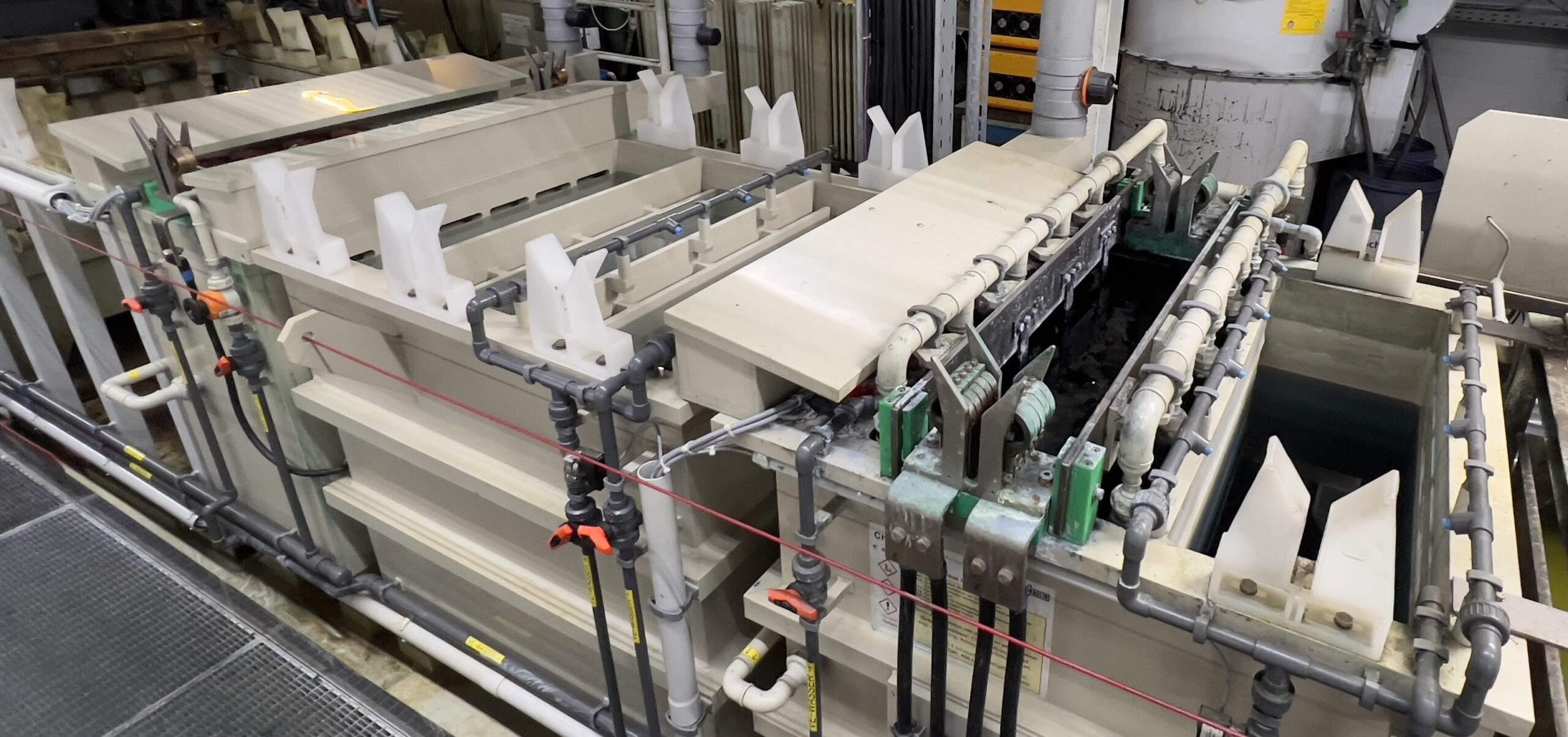
WEBER-HYDRAULIK GmbH is working on the introduction of a new galvanic hard chrome plating process into series production to meet the requirements of the European chemicals directive REACH. The functional hard chrome plating processes on a Cr(III) basis are not yet in widespread use and the coating results differ from the Cr(VI) processes used to date (which are to be replaced under REACH). Industrialization is proving to be very complex. Strongly fluctuating results and unclear process correlations make industrialization considerably more difficult, longer and more expensive. This is due to the complexity of the new hard chrome plating process and the entire influencing process chain. Considerable expenses are incurred for the introduction work. Up to now, the "classic" approach has been used for pre-series trials, based on the planning, execution and evaluation of experiments and test runs. The large number of requirements and variables, some of which cannot be fully controlled and managed, results in a wide range of parameters.
Solution idea
The use of machine learning models appears to be a promising way of speeding up developments and thus the introduction of processes. Ideally, this would allow targeted tests, further analyses and, if necessary, easier detection of process correlations that are not recognized with the methods currently used or are only recognized later. The aim of this quick check was therefore to examine whether it is possible to set up a model to support the development process. The type and objectives of the model were to be worked out on the basis of current developments and available data.
Benefit
Novel hard chrome plating processes based on Cr(III) electrolytes are currently not widely used and require new process knowledge. Individual developments for the respective products and application requirements are necessary due to the differing process chain, other physical-chemical processes and thus partially differing layer properties. Functioning AI-based development support would accelerate the introduction and improve quality.
The use of AI in the development and operation of electroplating processes is still in its infancy. The methodology of the solutions developed using the example of Weber can be transferred to other electroplating companies.
Implementation of the AI application
A pipeline was set up to process and merge the different data from the coating process. Electrolyte analyses from test series and data from the batch protocols were used for this. The aim was to predict various electrolyte components for the next time step. Different models such as XGBoost, Random Forest, Decision Tree, Linear Regression and K-nearest Neighbors were tested. This prediction could reduce the number of analyses required for the baths during operation. However, the existing database is currently not yet sufficient to enable this prediction to be made with sufficient accuracy using AI.
The basic developments can possibly also be transferred to other areas and processes in the company. The quick check made it possible to identify hurdles and requirements that could improve future usage options. The availability of a solid database was identified as the main point. Know-how was built up, which successively supports the further structured development of a database and enables the refinement and further development of the previously implemented application in the future.